How to Choose a Garage Workbench: Size, Height, Top and Storage
A good workbench makes every garage job easier, from fixing a bike to building shelves. A bad one wobbles, sits at the wrong height or fills up with clutter until there's nowhere left to work. Benches range from flat-pack tables to rolling steel tool cabinets, and the right one depends on the space you have and the work you do. Here's what to think about, in the order that matters most.
Start With Your Space
Measure the wall before you look at a single bench. A 4-foot bench fits almost anywhere, including a one-car garage that still has to hold a car; a 6-foot bench gives you a real work surface but takes a full section of wall.
Remember the space in front of the bench too. Drawers need room to open fully, and you need room to stand and move. As a rough guide, leave at least 2 to 3 feet of clear floor in front of any bench with drawers.
Get the Height Right
A comfortable work surface usually sits around wrist height when you stand with your arms relaxed. Too low and you'll bend over; too high and you'll lift your shoulders for every job.
Different tasks prefer different heights. Heavy work such as assembly or hand planing is easier a little lower, while detailed jobs such as electronics or sharpening are easier a little higher. If several people share the bench, or you do both kinds of work, an adjustable-height top is worth paying for.
Stand at your kitchen counter, which is usually about 36 inches high, and imagine working there for an hour. If it feels too low or too high, adjust your target height up or down from there.
Choose the Right Top
- Solid wood. Comfortable, kind to tools and easy to clamp to or mount a vise on. It needs an occasional coat of oil and will pick up marks.
- Coated or laminated board. Smooth, easy to wipe and usually cheaper. Less forgiving for hammering and clamping, and harder to repair once damaged.
- Steel. Very tough and good for mechanical work and oily parts, but noisy, cold and hard on tool edges.
- Add a mat or board. Whatever you choose, a rubber mat or sacrificial hardboard protects the surface during messy jobs.
Check the Load Ratings
Manufacturers usually list how much weight the top and any shelves can hold. Light-duty benches rated around 200 lb are fine for hand tools, hobby work and household repairs. If you plan to work on engine parts, mount a large vise or use the bench as an anvil, look for a heavy-duty steel frame with much higher ratings.
Drawer ratings matter as well. Slides rated around 100 lb per drawer handle most hand tools, while heavier cordless tools and batteries are better in drawers with reinforced or doubled slides.
Decide What Storage You Need
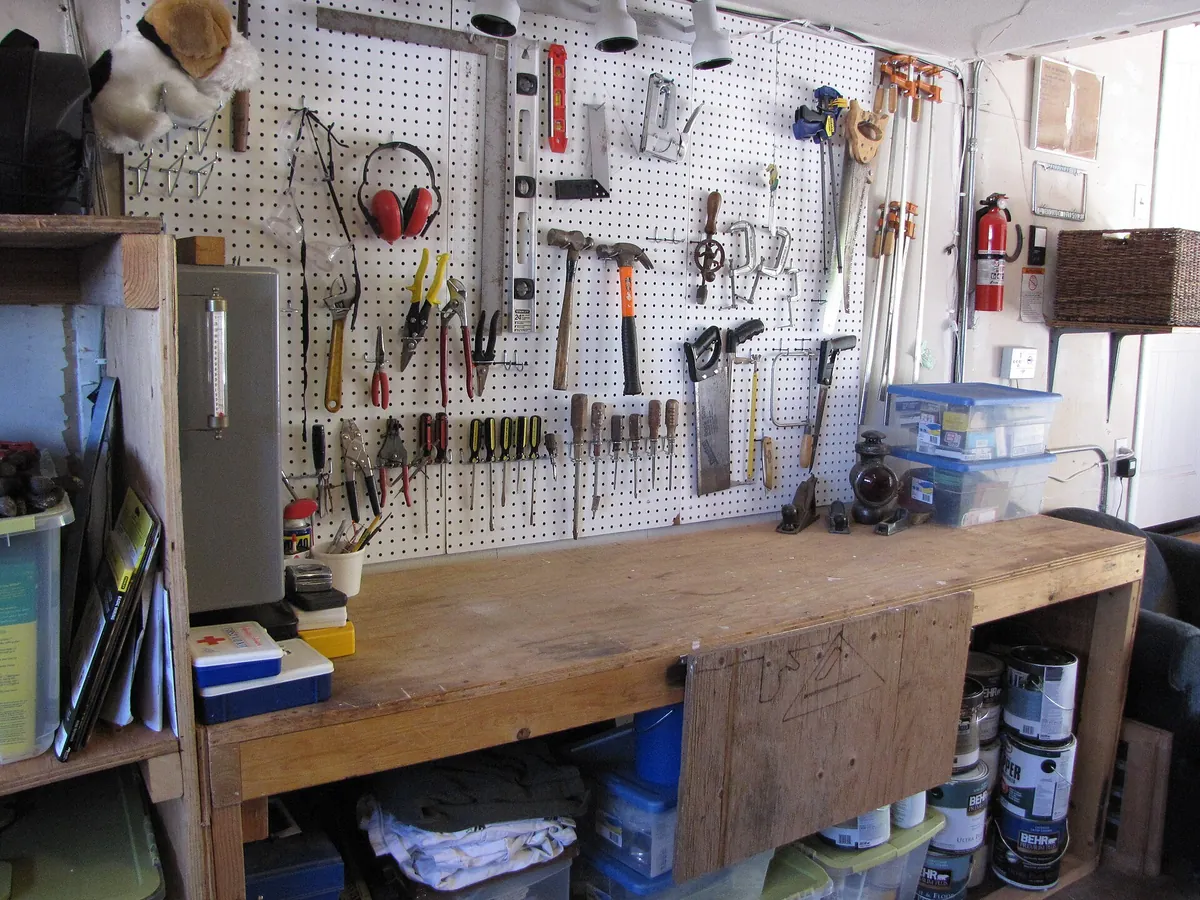
- Pegboard. Keeps the tools you use most in sight and within reach. Great for small spaces.
- Drawers. Protect tools from dust and keep the bench looking tidy. Deeper drawers fit power tools and chargers.
- Shelves. A lower shelf is the easiest place for bulky items such as a toolbox or shop vacuum.
- Built-in power. Outlets at the bench save running extension cords across the floor for chargers and small tools.
Fixed or Mobile?
Benches on locking casters can be rolled out to the driveway or pushed against the wall to park the car. They're especially useful in shared garages. Fixed benches on feet are more stable for heavy hammering and cost less for the same size.
If you choose a mobile bench, check that the casters lock and that the bench is heavy or wide enough not to tip when drawers are open. Load the heaviest tools in the lowest drawers.
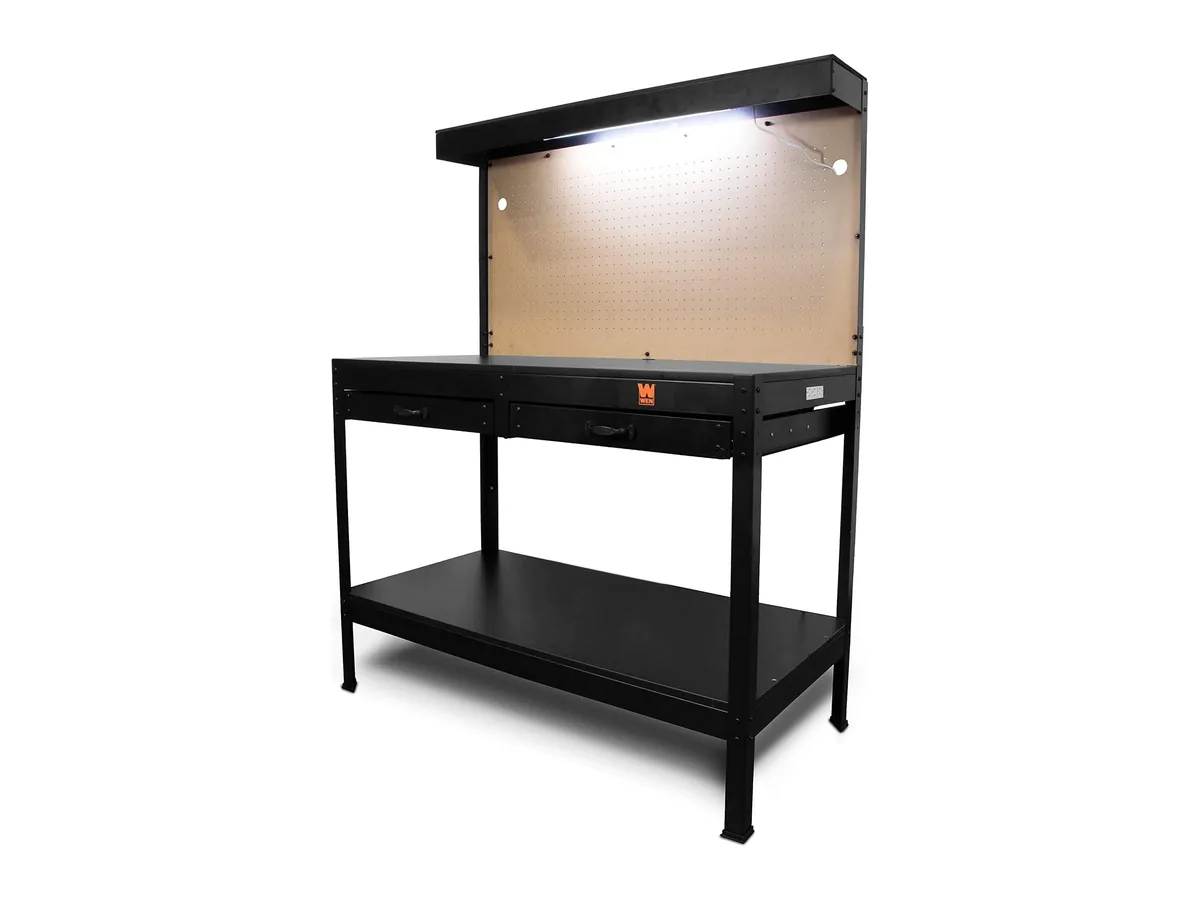
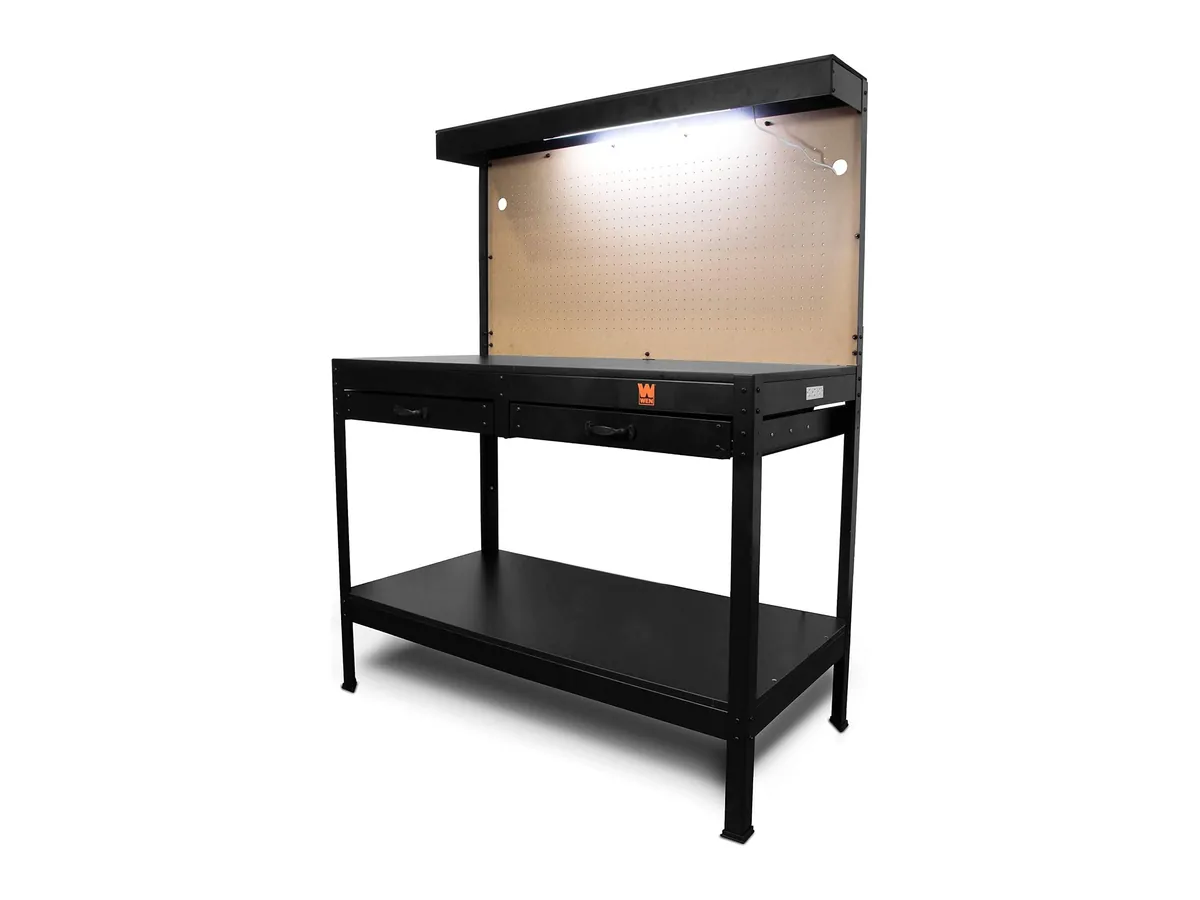
WEN WB4723T 48-Inch Workbench Review: A Complete Starter Bench on a Budget?
Pegboard, overhead light, built-in outlets, two drawers and a lower shelf in a 4-foot footprint.
Read our guide →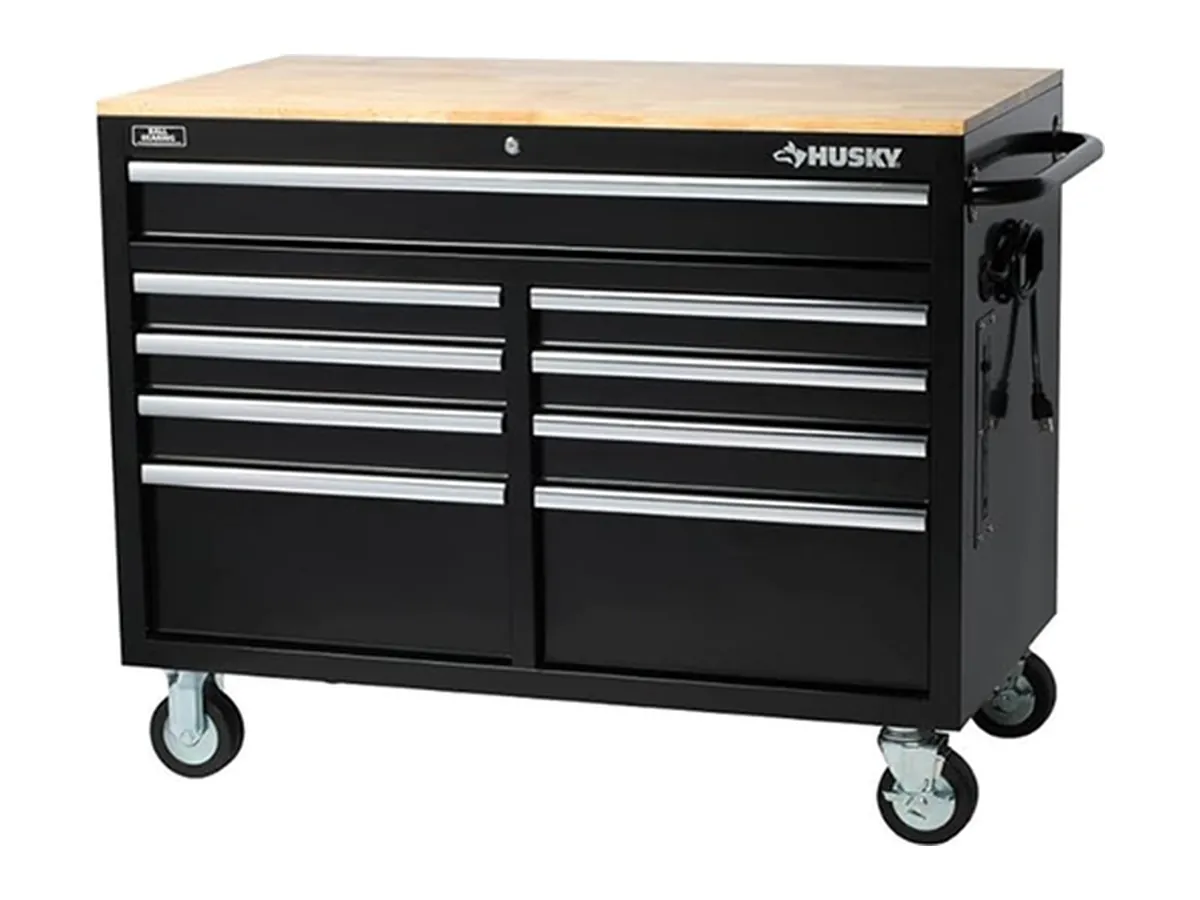
Husky Extra-Deep 46 in. 9-Drawer Mobile Workbench Review: Big Storage, Small Footprint
Nine extra-deep drawers and a solid wood top in a bench under 4 feet wide.
Read our guide →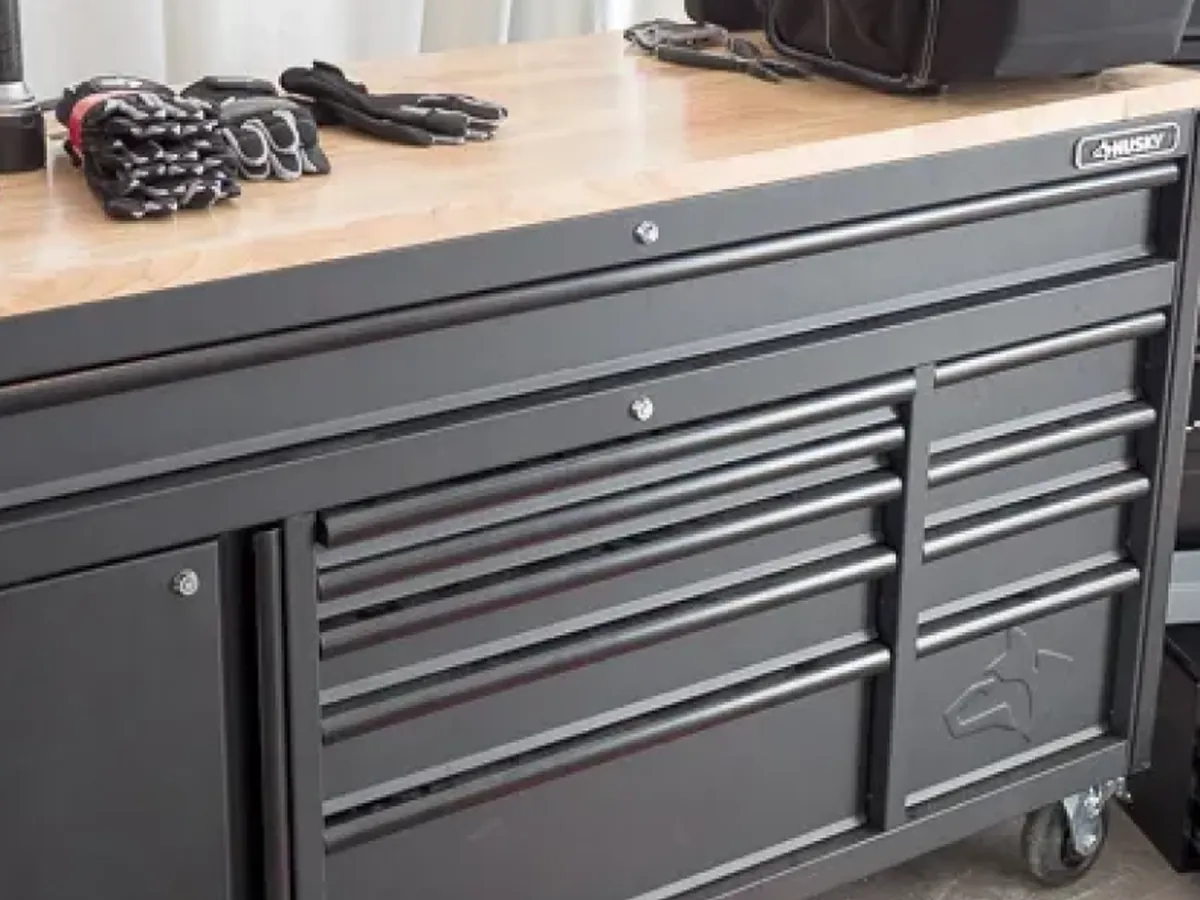
Husky 72 in. 18-Drawer Mobile Workbench Review: Is the Adjustable Top Worth It?
Eighteen drawers and a crank-adjustable solid wood top for serious home workshops.
Read our guide →FAQ
How deep should a workbench be?
Around 24 inches suits most people: deep enough for projects and tools, shallow enough to reach the back without stretching.
Is a wood or steel top better?
Wood is more comfortable and better for woodworking and clamping; steel suits oily mechanical work. Many people use a wood top with a mat for dirty jobs.
Do I need a vise?
Not to start. Add one when you find yourself holding parts by hand while sawing, filing or drilling. Make sure the top is thick and solid enough to mount it.