How to Organize a Small Garage Workshop: Walls, Zones and Habits That Work
A small garage can be a great workshop, but only if you can find what you need and still have room to work. Most cluttered garages don't lack space; they lack a plan for where things live. These ideas work whether you have a corner of a one-car garage or a full wall in a two-car space, and none of them require buying a particular brand of storage.
Start by Emptying and Sorting
Before buying a single hook or bin, take everything out of the area you want to organize. Sort it into four piles: tools you use often, tools you use rarely, supplies such as screws and paint, and things that don't belong in a workshop at all.
Be honest about duplicates and broken tools. Getting rid of three dried-up paint cans and a second rusty hammer frees more space than any clever shelving system.
Create Simple Zones
Group things by job, not by size. A small workshop usually needs only a few zones: a work surface, hand tools within reach of it, power tools and chargers, and long-term storage for supplies and seasonal items.
Put the zones you use every week closest to the work surface and the door. Things you touch once a year, such as holiday decorations or spare tiles, can go high on shelves or in the least convenient corner.
Use Your Walls
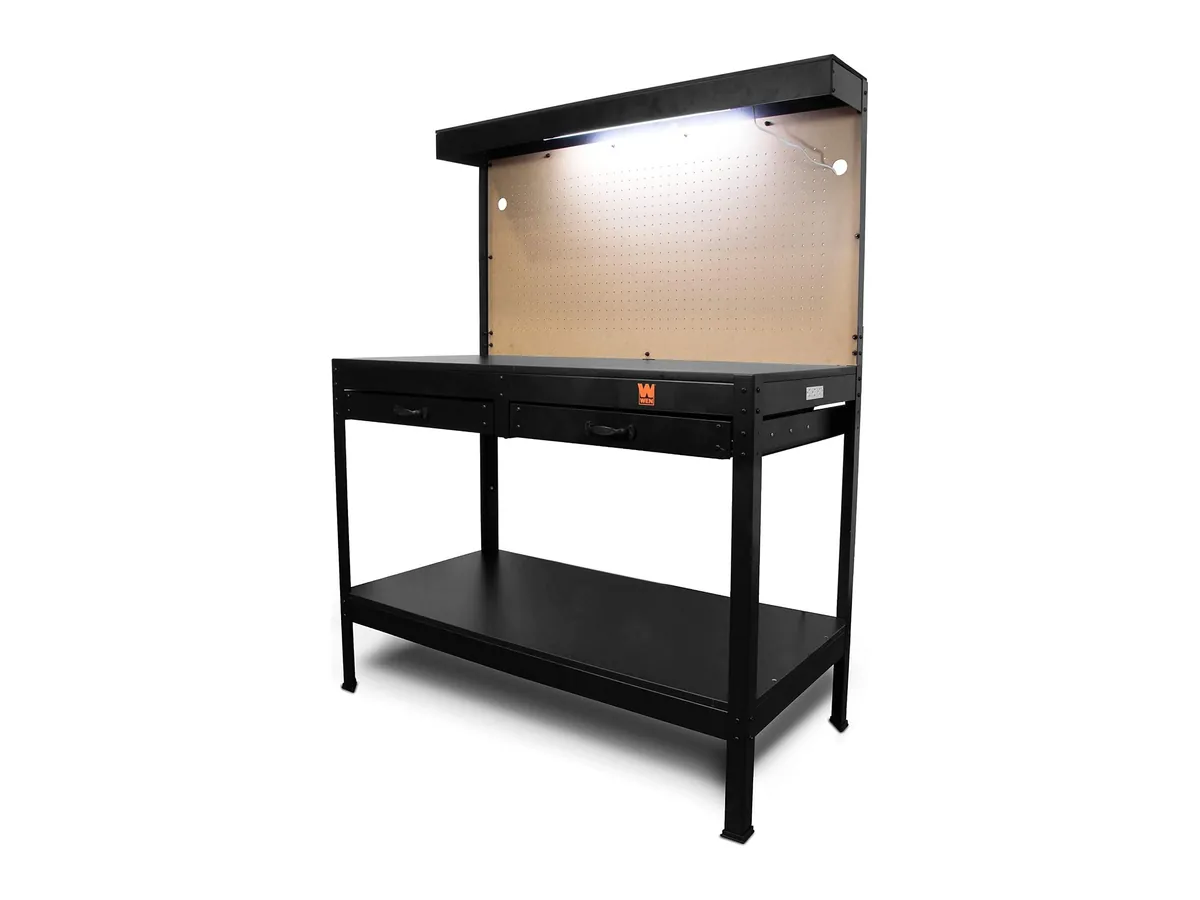
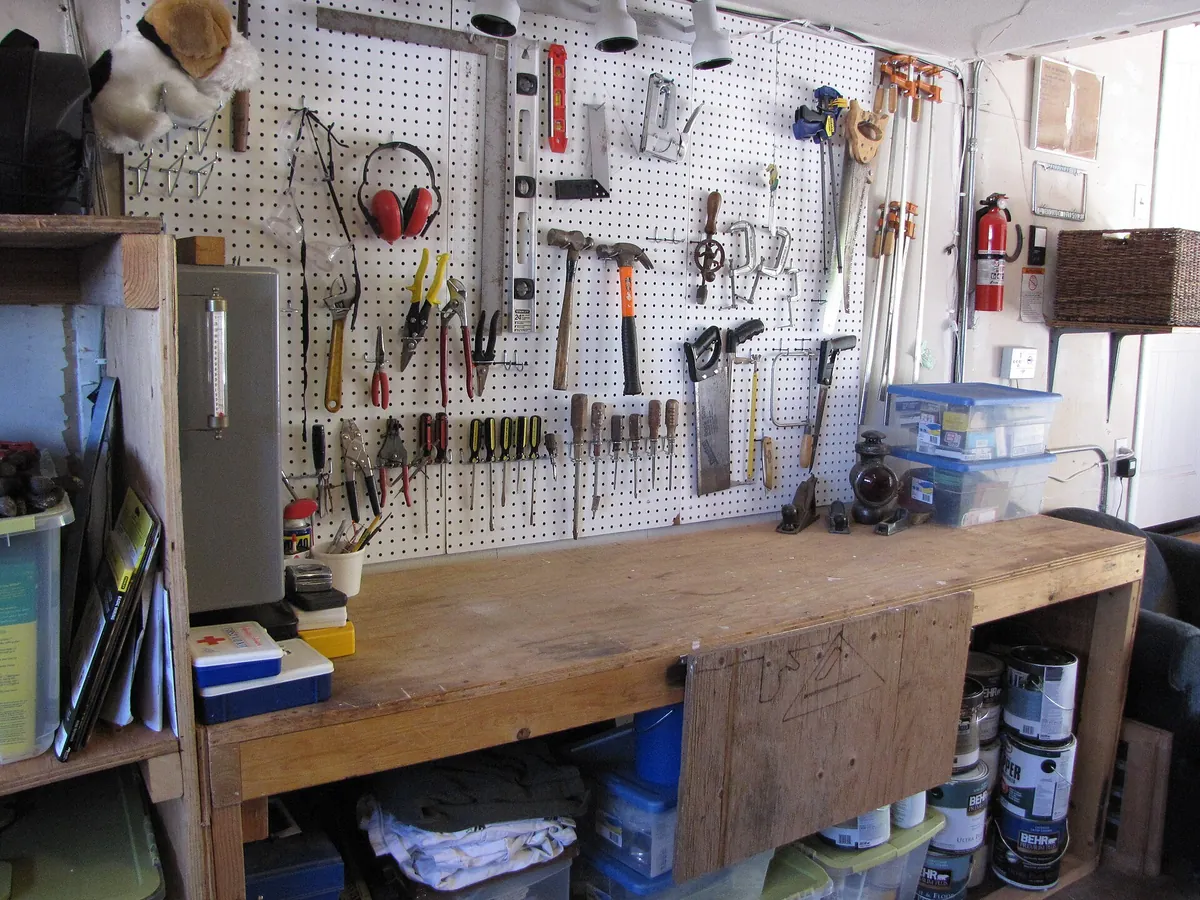
- Pegboard or slat wall above the work surface keeps everyday hand tools visible and easy to put back.
- Wall shelves above head height hold bins of rarely used supplies without taking floor space.
- Hooks and rails for long items such as ladders, rakes, extension cords and clamps.
- Magnetic strips are handy for screwdrivers, bits and small metal tools you grab often.
Draw around each tool on the pegboard with a marker. It takes ten minutes and makes it obvious when something hasn't been put back.
Bins, Labels and Small Parts
Clear plastic bins of the same size stack neatly and let you see what's inside. Label the front of every bin, even if you think you'll remember. Small-parts organizers with drawers work well for screws, nails, anchors and electrical bits.
Keep one empty bin as an inbox for things that need sorting. Emptying it once a week stops small items spreading across the bench.
Light and Power
Good light makes a small space feel larger and makes detailed work safer. A bright ceiling fixture plus a task light over the work surface is usually enough. Daylight-colored bulbs make it easier to see true colors when painting or finishing.
Place a power strip or outlets at the back of the work surface so cords don't cross the floor, and use heavy-duty extension cords for high-draw tools rather than chaining power strips together.
Keep the Floor Clear
- Roll heavy items. Put a shop vacuum, toolbox or saw on a mobile base so it can be moved for parking or cleaning.
- Fold-down or mobile surfaces give you extra workspace only when you need it.
- Keep a walkway. Leave a clear path from the door to the work surface, especially if you carry long boards or heavy parts.
- Sweep regularly. Sawdust and metal shavings hide small parts and make floors slippery.
Habits That Keep It Organized
The best system is the one you can maintain. Spend five minutes at the end of every project putting tools back and wiping the bench. Once a season, go through the shelves and remove anything you haven't used.
When you buy a new tool, decide where it lives before it comes into the garage. If there isn't a spot, something else has to go.
FAQ
Is pegboard or slat wall better?
Pegboard is cheaper and easy to install; slat wall holds heavier items and looks cleaner. For hand tools in a small workshop, pegboard is usually enough.
How high should wall shelves be?
Keep everyday items between waist and shoulder height. Put rarely used things above head height, and heavy items low.
How do I stop clutter coming back?
Give everything a home, label it, and finish every project with a five-minute clean-up.